
Kolomoni Microfinance Bank has officially adopted SeaBaas, our next-generation core banking solution, to power its operations and accelerate its growth trajectory.
This strategic go-live marks another strong signal of accelerating momentum for SeaBaas across Nigeria’s financial services ecosystem, as forward-looking institutions replace rigid legacy platforms with modernised core designed for scale, resilience, and real-time banking. Kolomoni’s adoption reflects a shared ambition between both organisations: to build customer-first financial services on infrastructure that is secure, adaptable, and designed for African market realities.
Choosing a Core Built for Modern African Banking
Microfinance banks across Nigeria are under increasing pressure to meet rising customer expectations, regulatory demands, and digital competition, all while managing cost and operational efficiency. For Kolomoni MFB, modernising its core banking infrastructure was a strategic decision to stay ahead of these shifts.
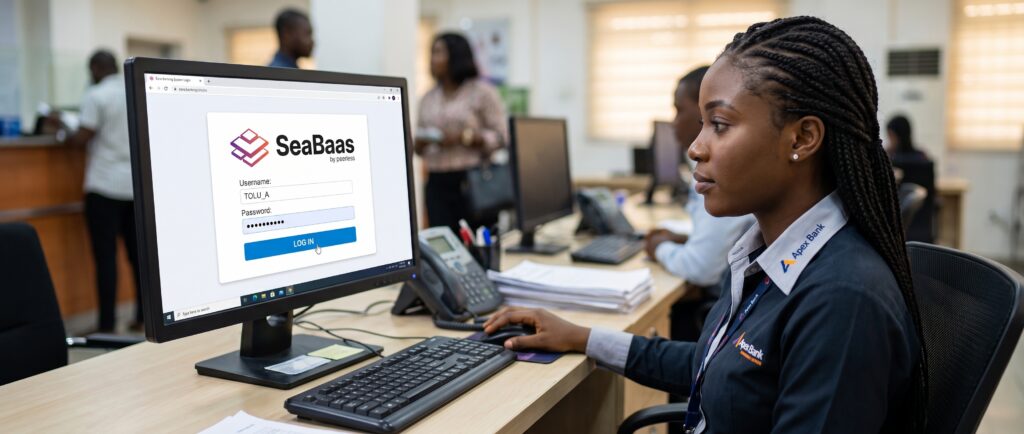
With SeaBaas, Kolomoni gains access to a cloud-ready, API-first core banking platform designed to serve financial institutions across all tiers and segments — from microfinance banks to national and regional players. SeaBaas is uniquely configurable, allowing each institution to tailor products, workflows, and operating models to its specific business strategy, regulatory context, and growth ambition, while delivering real-time transactions, seamless scalability, and built-in compliance without the complexity and cost burden of traditional core systems.
Speaking on the onboarding, Mustapha Otaru, Executive Director and Co-Founder at Peerless, said:
“Kolomoni’s decision to adopt SeaBaas reflects a clear understanding of where banking is headed in Africa. Institutions that want to scale sustainably need infrastructure that is flexible, secure, and designed for rapid change. As a core that works for institutions of different sizes and models, SeaBaas was built to provide a strong foundation, while remaining flexible enough to be configured around each bank’s unique requirements. We are proud to partner with Kolomoni as they enter this next phase of growth.”
Strengthening Customer Experience and Operational Agility
The decision to onboard SeaBaas was driven by a need for a platform that offers more than just transaction processing. Kolomoni required a partner capable of delivering seamless scalability, advanced compliance, and security features that safeguard both the bank and its customers.
By running on SeaBaas, Kolomoni MFB is positioned to deliver faster service delivery, improved customer experiences, and more efficient internal operations. The platform’s modular design allows the bank to introduce new products, optimise workflows, and respond to market demands without disruptive system overhauls.
For Kolomoni, the transition is not just about technology, but about building confidence in its ability to serve customers better and expand its impact within Nigeria’s financial ecosystem.Commenting on the go-live, Yusuf Adeojo, Managing Director of Kolomoni Microfinance Bank said:
“Our goal at Kolomoni has always been to build a resilient institution that serves customers efficiently and responsibly. SeaBaas gives us the operational clarity, speed, and scalability we need to achieve this. The choice of SeaBaas allows us to focus on growth and innovation, while relying on a core platform that understands our market and regulatory environment.”
SeaBaas Momentum Across Nigeria’s Banking Landscape
Kolomoni’s onboarding adds to a growing list of financial institutions choosing SeaBaas to modernise their core operations. From microfinance banks to larger financial players, the trend is clear: African institutions are no longer willing to be constrained by legacy technology that slows innovation and inflates cost.
Designed with flexibility at its core, SeaBaas supports a wide spectrum of financial institutions irrespective of tier, size, segment, or complexity. Its modular architecture allows banks to adopt only what they need, configure products without heavy custom builds, and scale seamlessly as their operations evolve. This adaptability is what makes SeaBaas a practical core for institutions at different stages of maturity, while maintaining a consistent standard of performance, security, and regulatory alignment.
SeaBaas continues to establish itself as the digital backbone for banks that want to lead the next generation of financial services on the continent. Built in Africa and engineered for scale, the platform is proving that locally developed infrastructure can meet global standards while remaining deeply aligned with regional realities.With SeaBaas at the heart of its operations, Kolomoni Microfinance Bank is well positioned to deepen financial inclusion, serve customers with greater speed and reliability, and scale its services confidently.
Ready to Experience SeaBaas?
The future of core banking is here, and it is African. If you’re ready to accelerate your digital transformation, we’d love to show you what SeaBaas can do for your institution.
Book a Demo Today and see how SeaBaas can give your business the competitive edge to be truly peerless.