
Islamic Finance Contracts Explained for Banks and Financial Institutions

Islamic banking does not begin with a product name. It begins with a contract, and that contract defines how money moves, how assets are treated, how profit is earned, how risk is shared, how customers are obligated, and how the institution proves that the product follows approved Sharia principles.
Islamic Core Banking System: Why Islamic Banks Need a Purpose-Built Core

This guide explains why Islamic and non-interest financial institutions need purpose-built core architecture, and what a truly Sharia-first system should look like.
Is Nigeria Ready to Become Africa’s Islamic Finance Hub?

Nigeria has been inching toward this question for years. In 2026, it feels harder to avoid.
The Rise of Non-Interest Banking in Africa: Trends Shaping 2026 and Beyond

For anyone paying close attention to how financial institutions across the continent are evolving, the signal is unmistakable: non-interest banking in Africa is no longer a niche accommodation for the religiously observant. It is becoming a strategic frontier.
Why “Interest-Free” Is Not the Same as “Sharia-Compliant”
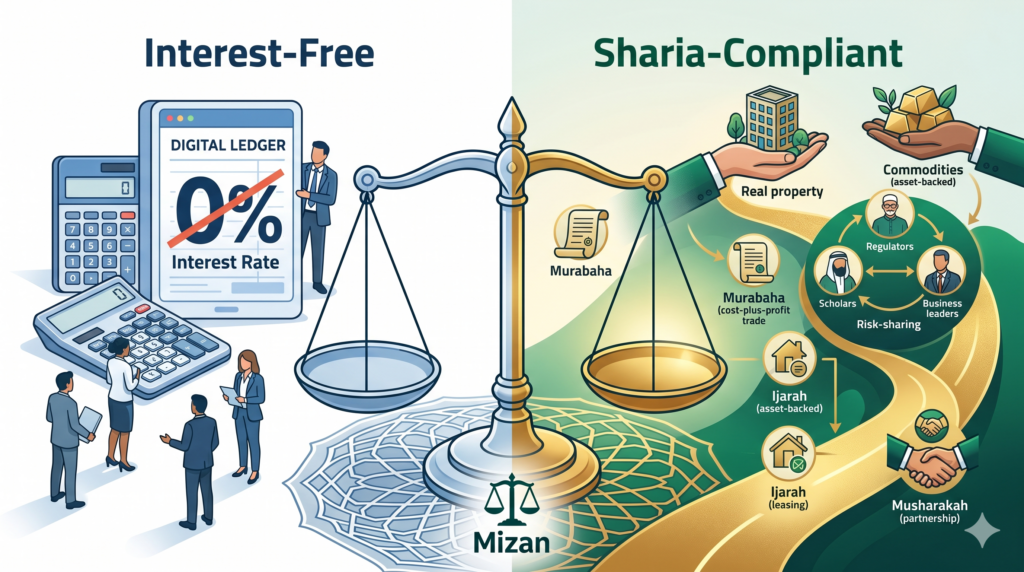
For banking executives, regulators, and Sharia scholars, this distinction is not merely semantic. It is the difference between an ethical facade and a robust, compliant financial system.